
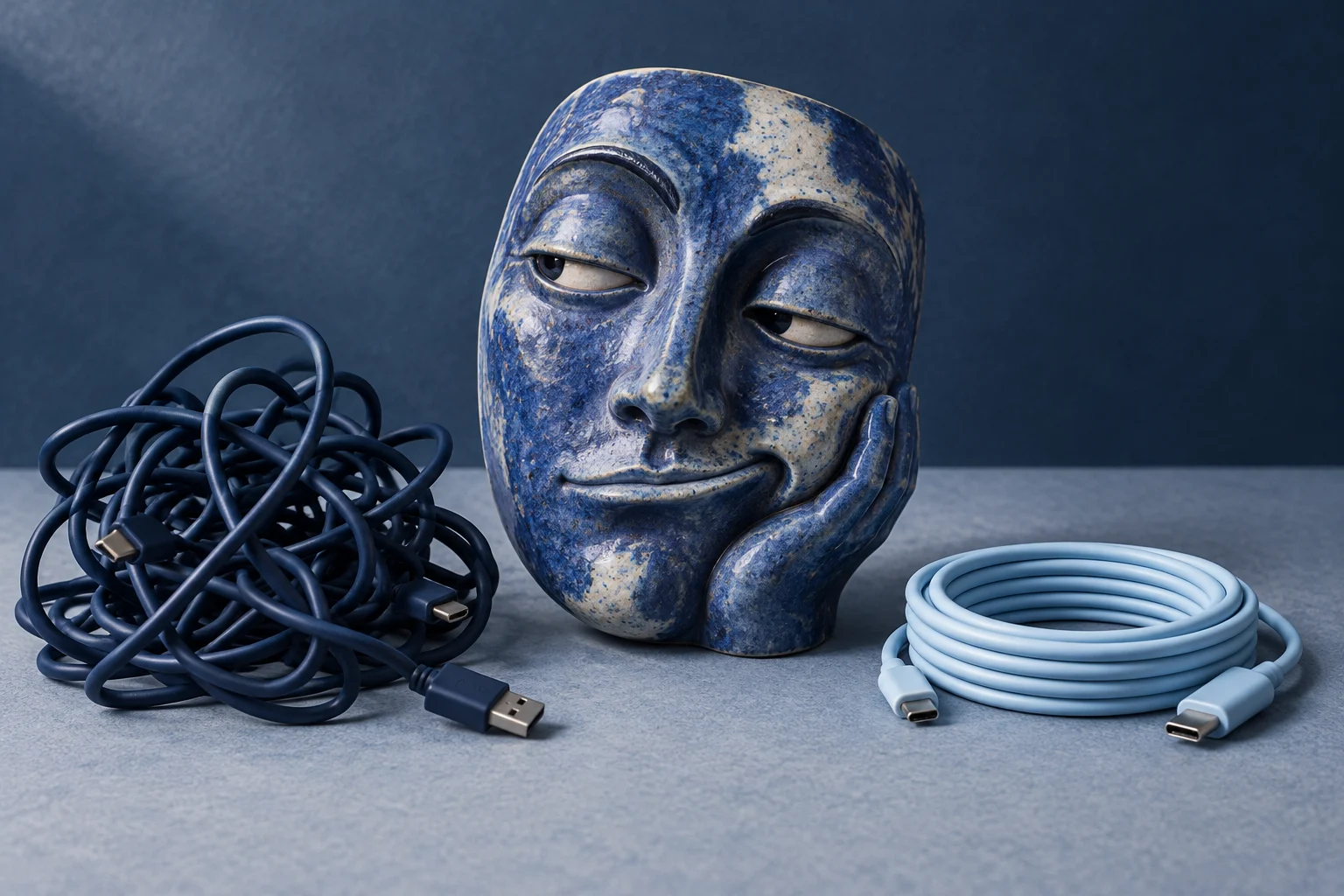
A useful brand reaction video starts with a situation the audience recognizes. The reaction gives that situation a tone: relief, surprise, disbelief or quiet frustration. Write the situation precisely enough that the viewer understands it before the expression arrives.
“Work is stressful” gives the visual little to react to. “The delivery window is between breakfast and bedtime” describes an event. The second line can support a short, readable video without a long explanation or a fabricated customer testimonial.
The following scripts are fictional examples. They show how to develop a setup and payoff, not how any particular customer behaved or how a real product performed.
Write the moment before selecting a reaction
Name the trigger, the expectation and the mismatch in a private draft. For a delivery example: a person expects a useful arrival estimate; the estimate spans most of the day. You only need the mismatch on screen, but knowing the full situation helps you choose a proportionate reaction.
Match the emotional intensity to the problem. A small inconvenience rarely needs a furious response. Mild disbelief often leaves more room for the viewer to recognize their own experience. The person in the reaction is illustrating an emotion, not speaking as a customer of your brand.
Prolifik’s Meme Reaction format is a relevant creation path for this structure. Start with your approved setup and inspect the resulting visual and timing together. A recognizable template does not make unclear copy understandable.
Script one: the delivery window
Setup: “Your parcel arrives today.”
Reveal: “Somewhere between your first coffee and your last meeting.”
Reaction direction: a patient smile slowly becoming a blank stare. Keep the movement restrained. The visual should read as waiting, not panic.
For a logistics brand, the post caption could discuss why useful delivery information matters. Do not add “We never do this” unless the service can support that absolute claim. If you want to explain your own notification feature, make a separate demonstration using its real behavior.
This example works because the setup supplies an expectation and the reveal changes it. Removing the setup would leave the reaction attached to an isolated complaint with less narrative shape.
Script two: the password reset loop
Setup: “You remembered the password.”
Reveal: “The account remembered that you changed it.”
Reaction direction: a small nod of confidence followed by a pause. The text changes before the expression changes, so the viewer can follow the cause of the reaction.
Keep the background generic. A staged login illustration is enough; a screenshot containing a real email address or account message introduces unnecessary personal information. Do not fake a competitor error screen or suggest that one service caused the situation without evidence.
The humor here concerns a familiar memory failure. It does not need a security claim or a promise that a product removes every authentication problem. A narrow observation gives the reaction room to work.
Script three: the enormous recipe introduction
Setup: “You opened the recipe to check the oven temperature.”
Reveal: “You are now reading about the author’s childhood kitchen.”
Reaction direction: an attentive look fading into polite impatience. Show no real author, article title or publication unless the piece is a specific, fair commentary supported by the actual source.
A meal-planning app could use this as an observation about finding practical information. The next post might show how its own recipe view works. The reaction itself should not pretend to demonstrate that interface.
Shorten the text if it dominates the screen. “Checking the oven temperature” and “Meeting the entire family first” preserve the core joke, but the longer version may be clearer for an audience unfamiliar with the convention. Choose clarity over an arbitrary word count.
Script four: the cable that only works at one angle
Setup: “The charger works.”
Reveal: “If nobody moves.”
Reaction direction: cautious relief followed by a frozen pose. A staged cable scene can carry the physical context while the line supplies the condition.
For an accessories brand, avoid showing a dangerous setup or encouraging people to keep using damaged equipment. The creative point is the recognizable inconvenience. A product comparison or durability claim would require separate evidence and a different treatment.
This is the shortest example because the physical situation does much of the explaining. Do not expand it into a paragraph just to make the video longer. Hold the meaningful moment and end once the response is clear.
Build a brand connection without forcing a sales ending
Choose problems that genuinely sit near the audience’s work or daily use of the product. A project-management brand can plausibly discuss unclear deadlines. A kitchen brand can discuss recipe friction. The relationship should be understandable before a logo appears.
Use a caption or a subsequent post to explain the product connection when it needs more space. Forcing a feature list into the final second can make both the joke and the product harder to understand. The brand meme guide helps assess fit, while making video memes covers the production structure.
Review the reaction as part of the message
Watch the final render without sound and check the order of events. The viewer should read the setup, recognize the change and see the reaction in that order. Make the text large enough to read without covering the face or the relevant background object.
Confirm that the visual is suitable for your intended use and does not imply an endorsement. Check any real screenshot against its source and remove private details. If the reaction makes the brand look contemptuous of its customers, change the treatment. Shared recognition is a better foundation than making the audience the target of the joke.
Turn one recognizable situation into a reaction
Use an approved setup and a proportionate visual response in Prolifik’s Meme Reaction format.
Explore Meme ReactionProduct and primary-source checks: 15 October 2026. Worked examples are illustrative unless a real source is identified.